Befira Font Review: Elegant Script for Branding
I still remember the moment I opened a blank brand board for a local boutique skincare line. The client wanted something that felt expensive but approachable, luxurious but not cold. I scrolled through my library of Fonts, skipping over the rigid sans serifs and the overly decorative display types, until I landed on Befira. As a Script Handwritten typeface, it immediately caught my eye with its fluid motion. I dropped it into a logo concept, and just like that, the empty space transformed into something with personality. This wasn’t just a font; it was a mood setter.
Using Befira for Wedding Invitations and Luxury Branding
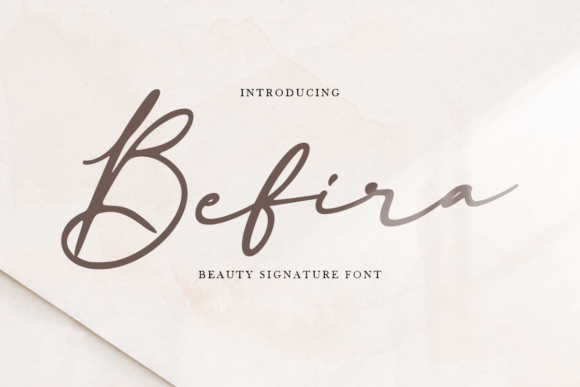
Befira is an elegant script font exuding sophistication and charm, which makes it an instant favorite for high-end projects. When I tested it on a wedding invitation suite mockup, the difference was palpable. Many script fonts struggle to balance readability with flair, often becoming illegible scribbles at smaller sizes or looking too stiff when scaled up. Befira, however, maintains its graceful curves and flowing lines regardless of the application. It embodies a sense of timeless beauty that resonates deeply with couples planning their special day or brands aiming for a heritage feel.
In my experience, this typeface shines brightest when used for short, impactful phrases. I placed the bride’s name in Befira against a textured cream paper background, and the contrast was stunning. The thin strokes didn’t get lost, and the thick downstrokes provided enough weight to anchor the design. For designers working in the wedding industry, this font is a reliable tool for adding a touch of refinement to invitations, save-the-dates, and menu cards. It doesn’t just sit on the page; it dances across it, inviting the viewer to read closer.
How Befira Performs in Logo Design and Packaging Mockups
Moving from print to product, I wanted to see how Befira held up in a real-world branding scenario. I applied it to a packaging mockup for a small-batch candle company. The challenge here was legibility against a busy background. Because Befira is a Script Handwritten font with distinct character shapes, it stood out clearly even when printed on a textured label. The flowing lines created a natural rhythm that guided the eye across the brand name, making it memorable.
One of the key strengths I noticed during this test was the font’s versatility as a primary logo mark. While many script fonts require heavy modification to work as a standalone logo, Befira felt complete right out of the box. The connections between letters are smooth, avoiding the awkward gaps that plague lower-quality Fonts. For entrepreneurs and small business owners, this means less time tweaking kerning and more time focusing on the overall brand identity. Whether it’s on a shop sign, a business card, or a social media profile picture, the font retains its sophisticated charm.
Pairing Befira with Serif and Sans Serif Typefaces
No font exists in a vacuum, and part of my review process involves testing pairings. Befira is an elegant script font exuding sophistication and charm, but it needs support to build a full visual hierarchy. I experimented by pairing it with a clean, modern sans serif for body text. The contrast was immediate and effective. The simplicity of the sans serif allowed the intricate details of Befira to take center stage without competing for attention. This combination worked perfectly for a website header, where the script font served as the headline and the sans serif handled the navigation and subheaders.
I also tried pairing it with a classic serif font for a more traditional editorial look. This combination felt appropriate for a bakery or a handmade shop branding project. The serif added a layer of authority and tradition, while Befira injected warmth and personality. When selecting Fonts to pair with this script, I recommend avoiding other decorative or handwritten styles. Let Befira be the star. Using a neutral supporting typeface ensures that the graceful curves remain the focal point, enhancing brand perception and professionalism.
Readability Limits and Best Practices for Web Design
While Befira is beautiful, it is crucial to understand its limitations. As a Script Handwritten typeface, it is not designed for long paragraphs of body text. I tested it in a website hero section, and it looked fantastic for the main headline. However, when I tried using it for smaller subheadings or button text, readability dropped significantly. The intricate ligatures and swashes that make it charming at large sizes can become cluttered when scaled down. For web design, stick to using Befira for H1 headers, quotes, or short call-to-action phrases.
For social media graphics, this font performs well on square posts where the text is large and central. I created an Instagram layout featuring a quote in Befira, and the engagement potential was high due to its aesthetic appeal. However, for stories or reels where text moves quickly or appears small, a simpler font is safer. Always test your designs on multiple devices. What looks crisp on a desktop monitor might blur on a mobile screen. By respecting these boundaries, you ensure that the font enhances user experience rather than hindering it.
Licensing Considerations for Commercial Font Use
Before finalizing any project with Befira, it is essential to review the licensing terms. As a professional designer, I always check whether the font license covers commercial use, especially for client work involving packaging, merchandise, or digital products. Befira is an elegant script font exuding sophistication and charm, making it a valuable asset for premium brands, but its value depends on proper usage rights. Ensure you have the correct license for webfonts if you plan to embed it on a client’s website.
Additionally, check for included alternates or ligatures. High-quality Fonts often come with extra glyphs that allow for customization. While Befira stands strong on its own, accessing these extras can help you create unique logos that don’t look like templates. Take the time to explore the font file thoroughly. Test it in black and white first to judge its structural integrity before adding color. This practical approach ensures that your final design is not only beautiful but also robust and legally sound for any commercial application.